Archaeological Drawing Final
Course: ARCH-416 Archaeological Drawing
Core Literacy:
- Technology
Learning Goals:
- Conduct research by traditional and digital methods
- Identify and assess selected artifacts and monuments within their cultural contexts
In the course ARCH-331, Archaeological Drawing, through College Year in Athens, I spent the semester learning the fundamentals of drawing various pottery vessels and shards, as well as lithics. We began the semester with the fundamentals of drawing archaeological artifacts methodologically, and once we mastered the basics with drawing basic pottery vessels, moved into drawing more complicated finds. This included drawing pottery sherds, decorated ceramic vessels, and lithic flakes. Towards the end of the semester, we had the opportunity to go to the site of Kerameikos cemetery, and draw a site map of one of the buildings. Additionally, we learned how to ink some of our drawings, digitally on Adobe Illustrator and by hand.
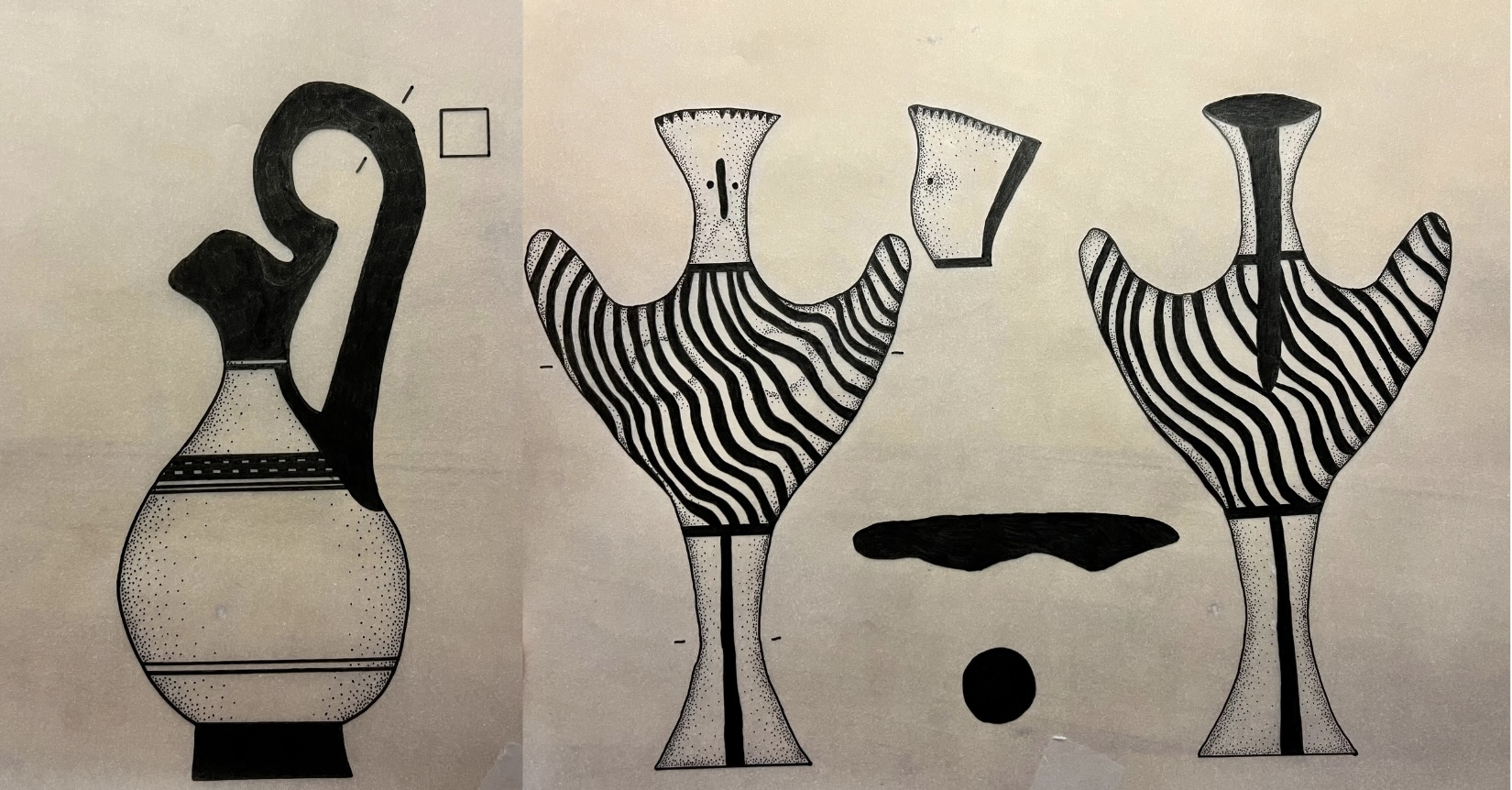
For my final project, I chose to ink two drawings I had drawn prior in the semester, a replica of a Mycenaean figurine and an Ancient Greek oinochoe. Looking back on this assignment, I found this to be somewhat tedious work, but gratifying to completely finish one of my earlier works from the semester. While I didn’t find the inking to be technically difficult, it required concentration and a steady hand, which I found to be a challenge at times. The original pencil drawing for both of these also required precise measurements, in order for the artifacts to look exactly the same as a 2D image on paper. This was an incredibly unique class, and I would love to continue with this type of work in the future, especially at an archaeological project in Greece.
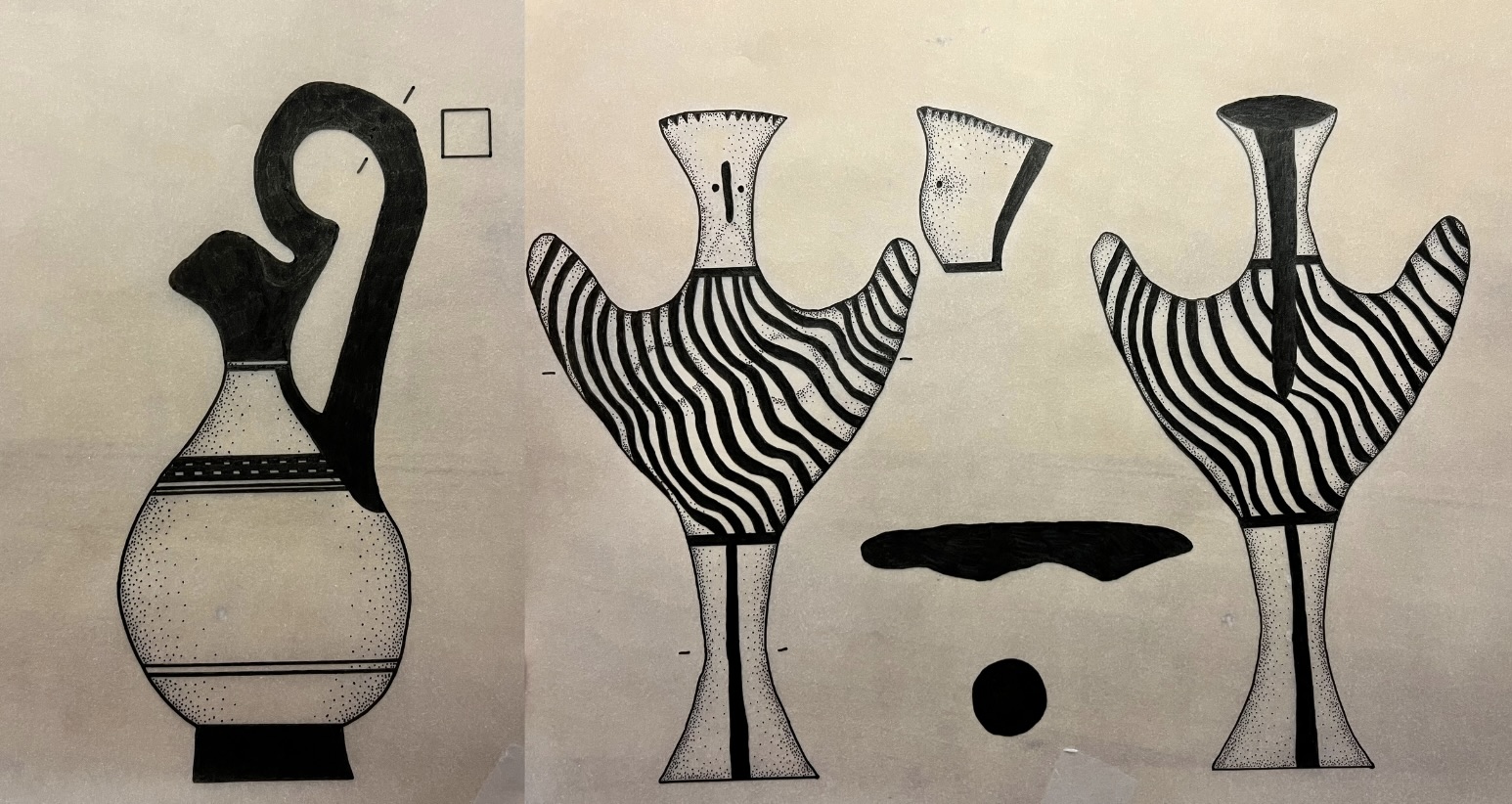
Left: Inking of an Ancient Greek oinochoe replica, completed May 2025.
Right: Inking of a Mycenaean figurine replica, completed May 2025.